Eight Days From Tokyo to Aomori Through Japan’s Volcanic North
By Samurai Campers · Pickup: Tokyo · Return: Aomori (one-way — confirm with team) · Last driven: January 2025 · Reviewed: June 2026
One-way route: Confirm before booking that one-way drop-off is available for your dates, where the Aomori handover point is, and what surcharge applies. Trying to drive this as a round trip in 8 days is a mistake — you’d spend three of those days on highways. Contact our team first.
This route is short and concentrated. Eight days, almost entirely through national parks shaped by volcanic activity. Five of those parks are still seismically active. The roads cross crater rims, skirt steaming sulphur vents, and pass lakes whose water colours change with mineral content. It’s the most geologically dramatic short route in Japan.
The trade-off for intensity is that everything depends on the season. Half the scenic roads on this itinerary close mid-November to late April. Late May through October is the window, with September and October being the best for autumn colours.
- Answer box — Tokyo to Aomori by campervan
A one-way campervan route from Tokyo to Aomori through Japan’s volcanic national parks takes 7–9 days. Eight days is the sweet spot. Major stops: Nikko, Mount Bandai, Zao, Naruko Onsen, Hachimantai, Lake Towada. Most scenic highland roads are closed mid-November to late April.
Route at a glance
Tokyo → Nikko → Nasu Onsen → Aizu-Wakamatsu → Mount Bandai → Zao → Naruko Onsen → Morioka → Hachimantai → Lake Towada → Hakkoda → Aomori
Duration: 8 days, one-way Tokyo to Aomori
Best season: Late May to October. Mid-November to late April: most scenic roads close.
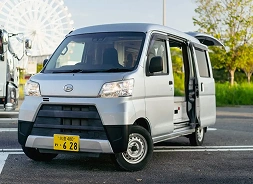
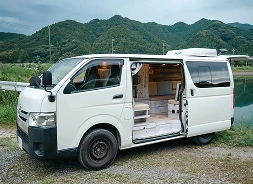
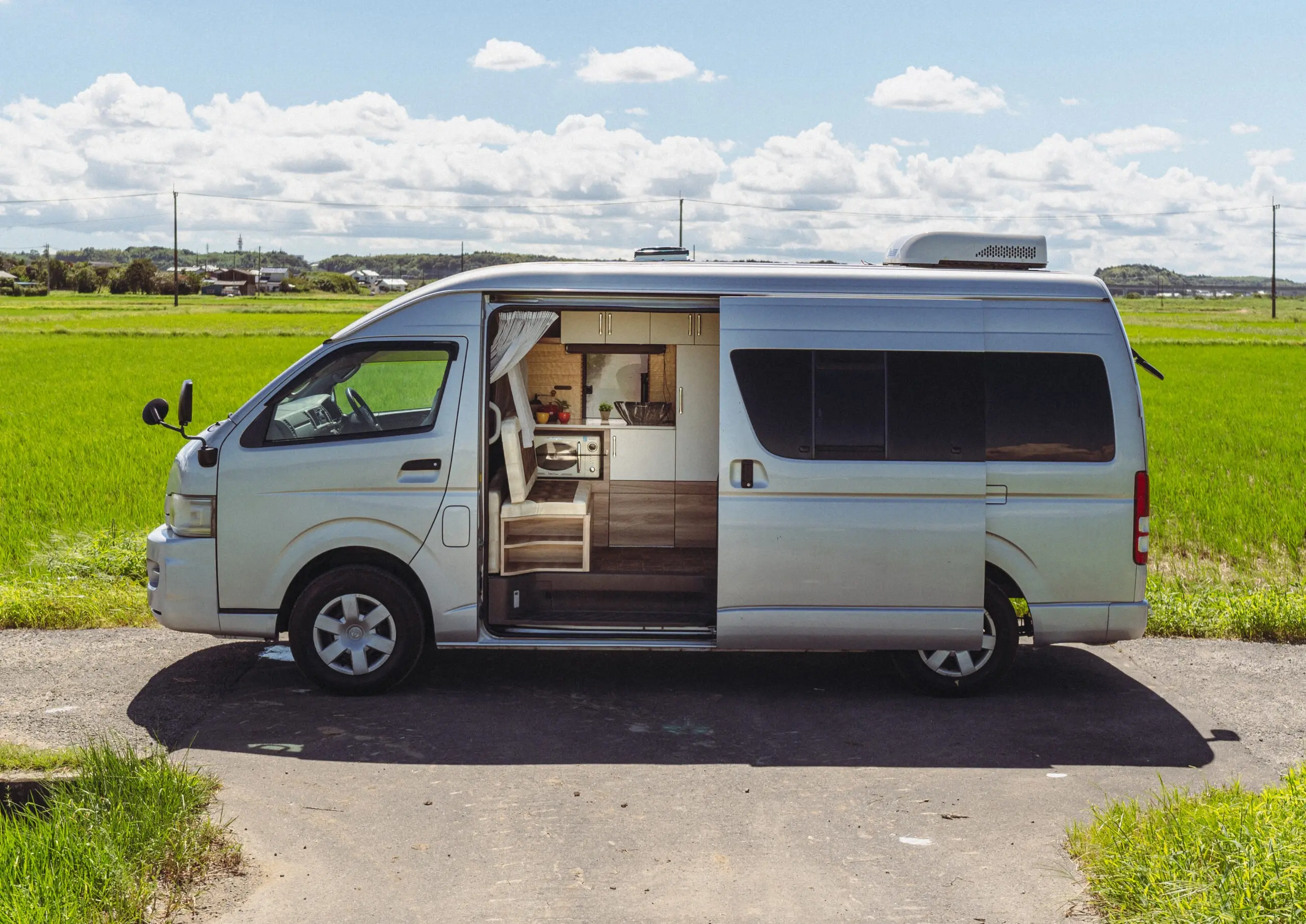
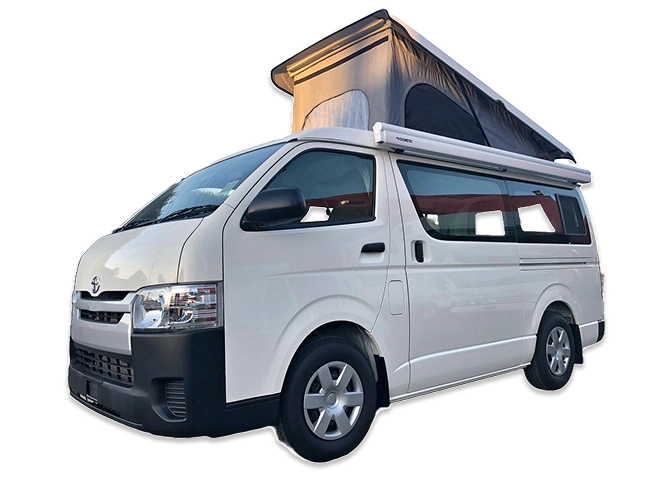
Recommended vehicle: Mid-Size Campervan (mountain roads, narrow volcano passes) or Mini Campervan (solo travellers / small groups for easier parking). Both available from our Tokyo branch.
Hardest sections: Bandai-Azuma Skyline (Day 4) and Zao Echo Line (Day 5). Both weather-dependent.
 Road trip map
Tokyo to Nikko
Collect from our Tokyo branch and drive north — about 150 km via the Tohoku Expressway. Nikko National Park (designated 1934) contains volcanoes, plateaus, lakes, waterfalls, and the Tosho-gu shrine complex — the mausoleum of Tokugawa Ieyasu, who founded the shogunate in 1603. Kegon Falls and Lake Chuzenji are in the higher park area. The Iroha-zaka switchback road — 30 hairpin turns named after syllables of the old Japanese alphabet — climbs from Nikko town to the lake.
Day 1 overnight: Nikko National Park RV Park — ¥4,200/night
On 15 July 1888, the northern flank of Mount Bandai collapsed in a volcanic debris avalanche, killing 477 people and reshaping the entire plateau. Goshikinuma (the Five Coloured Ponds) is the most famous result — the ponds’ varying colours come from dissolved volcanic minerals: iron compounds, aluminium silicates, suspended particles. A short walking trail (around 4 km, mostly flat) connects them.
Walking the Goshikinuma trail in the morning, with steam still rising off the ponds, you feel that this entire landscape is recent — younger than most of the cities on the Tokaido.
Quick fact — Mount Bandai 1888 eruption: The debris avalanche killed 477 people, dammed rivers and formed the Urabandai wetland system. Mount Bandai lost 1.4 km³ of mass — one of the largest historical volcanic landslides anywhere.
Day 3 overnight: Urabandai Camper Area — ¥4,500/night
Mount Bandai and the Five Coloured Ponds
Kumomi Beach
On day two, start your day by heading to Kumomi Beach, renowned for its crystal-clear waters and beautiful rocky coastline. On clear days, you may even catch a glimpse of Mount Fuji in the distance, creating a breathtaking view. Spend time walking along the beach, soaking in the tranquility and the natural beauty of Izu’s coast.
A 29 km scenic toll road across the Azuma volcanic plateau at around 1,600 m elevation. Jododaira Rest House sits near the highest point, with views toward Azuma-Kofuji (a near-perfect small volcanic cone) and active steam vents from Mount Issaikyo. Drive this in clear weather only — fog at 1,600 m makes the road dangerous and pointless. Typically closed mid-November to early April.
Day 4 overnight: Urabandai Camper Area — ¥4,500/night
Bandai-Azuma Skyline
Zao Okama and Naruko Onsen
Zao Okama: a 360 m wide crater lake at 1,650 m. The water shifts between green and turquoise depending on sunlight and dissolved minerals. The Zao Echo Line is closed mid-November to late April. Descend to Naruko Onsen in Miyagi — one of Japan’s oldest documented hot spring areas, operating for roughly a thousand years. Use this as a rest day.
Day 5 overnight: Naruko Onsen RV Area — ¥4,200/night
Drive north through Morioka (local specialities: wanko soba, reimen, jajamen — all worth trying) and on to Hachimantai. The Hachimantai Aspite Line: volcanic plateaus, crater lakes, marshes, and hot spring pools at altitude. Road closed in winter.
Day 6 overnight: Hachimantai RV Camp — ¥4,300/night
Naruko to Hachimantai
Lake Towada and Oirase Stream
Lake Towada: a double-caldera lake formed by volcanic eruptions roughly 13,000 and 6,200 years ago. The Oirase Stream is the lake’s only outflow — 14 km of forested gorge with walking paths. The autumn colours along Oirase in late October are some of the best in Tohoku.
Day 7 overnight: Lake Towada Camper Park — ¥4,500/night
Hakkoda to Aomori
Drive through the Hakkoda mountain range — more than 20 volcanoes. Descend to Aomori on Mutsu Bay. The Nokkedon market: a build-your-own seafood bowl where you select toppings from individual stalls. Drop off the campervan at our Aomori branch. From here: ferry to Hokkaido, Shinkansen to Tokyo (under 4 hours), or fly from Aomori Airport.
Where to eat: Nokkedon Market, Aomori (fresh scallops, tuna, seasonal seafood)
Day 8 drop-off: Samurai Campers Aomori Branch — confirm exact handover point with our team when booking
Take the Wheel on This Japanese Route
Samurai Campers operates self-drive campervan rentals across Japan. No driver provided — you’re in complete control of the schedule, the stops, and the pace. Pick up in Tokyo, return in Aomori (one-way).
Contact our team first to confirm one-way availability and Aomori drop-off details. One-way surcharges apply — our team will give you the exact figure for your dates. Narrower mountain roads on this route favour mini or mid-size models.
Have Questions?
Key Questions About the Tokyo to Aomori Volcanic Adventure
Read our FAQ sections, we have collected the most asked questions.
Is the Zao Echo Line open year-round?
No. The Zao Echo Line, the Bandai-Azuma Skyline, and the Hachimantai Aspite Line all close mid-November to late April. Without them, this itinerary loses most of its value — plan around the seasonal window.
What's the onsen etiquette?
Wash thoroughly at the seated showers before entering the bath. No swimsuits — onsen are nude bathing. Tattoo policies vary: this route includes traditional onsen where visible tattoos may not be allowed. Check each facility before you arrive.
Can this route work as a round trip in 8 days?
No, not in any practical sense. This itinerary is built as a one-way drive from Tokyo to Aomori, and trying to turn it into a round trip in the same window leaves you rushing past the best parts. Contact the team before booking to confirm one-way availability for your dates, the exact Aomori drop-off point, and the surcharge.
What's the best time of year for this Tokyo to Aomori campervan route?
Late May through October is the useful window. Outside that period, too many scenic mountain roads close, and the route loses the sections that make it worth doing in the first place. September and October are the strongest months if you want autumn colour, especially around Lake Towada and Oirase Stream.
Which roads usually close in winter?
The Bandai-Azuma Skyline, the Zao Echo Line, and the Hachimantai Aspite Line are the big ones to watch. They typically close from mid-November to late April, with exact dates shifting by weather and local conditions. If those roads are shut, the route still exists, but it stops being the same trip.
What kind of campervan should I book?
A Mid-Size Campervan is the safer pick for most travellers, especially if you want a bit more comfort on mountain roads and in narrow park access points. A Mini Campervan works well for solo travellers or anyone who wants easier parking in towns like Nikko, Aizu-Wakamatsu, and Morioka. Both are available from the Tokyo branch, so the better choice comes down to how much space you want versus how simple you want the drive to feel.
What are the hardest driving sections on this route?
The two sections to pay attention to are the Bandai-Azuma Skyline on Day 4 and the Zao Echo Line on Day 5. Both are high-altitude, weather-dependent roads, and fog can turn them into a bad bet fast. If the forecast looks poor, it’s better to skip the scenic pass than force it.
How does the route end, and how do I get back to Tokyo?
The route ends in Aomori, where you return the campervan at the branch handover point confirmed at booking. From there, you can take the Shinkansen back to Tokyo in under four hours, catch a ferry to Hokkaido, or fly from Aomori Airport. If you want to keep going north, this route connects neatly into a longer Tohoku and Hokkaido trip.
14-day campervan route through Japan's best street food districts. Ends in Dotonbori by design.
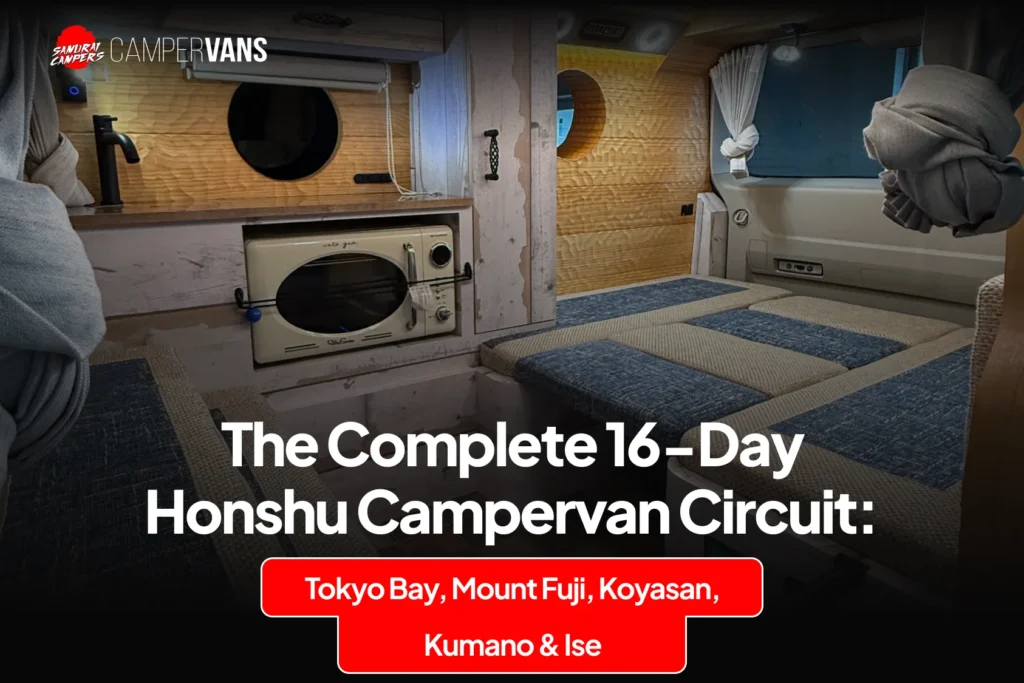
A 16-day Tokyo circuit built around Koyasan, Kumano Kodo, and Ise Japan's deepest sacred trail.
Cross Honshu from coast to coast in 15 days. Three climate zones, one campervan, no repetition.