16-Day Honshu Campervan Circuit: Mount Fuji, Koyasan, Kumano & Ise
By Samurai Cmapers · Pickup: Tokyo branch · Return: Tokyo branch · Last driven: May 2026 · Reviewed: June 2026
What this route is actually about
Three things, in roughly equal measure: sacred mountains, pilgrimage routes, and rural Japan. The route bypasses central Kyoto and Osaka almost entirely not because they aren’t worth visiting, but because they’re worth visiting properly on a different trip. A campervan in central Kyoto is an expensive way to feel anxious about parking.
Mount Fuji is the obvious opening anchor. Climbing it was a religious pilgrimage for centuries before it became a tourist site, and the viewpoints around the Five Lakes still carry that weight if you go at dawn rather than noon. Koyasan, founded in 816 CE by Kūkai, is the spiritual centre of Shingon Buddhism and contains 117 active temples on one mountain. The Kumano Kodo is older and stranger pilgrims have walked these forest trails continuously for over a thousand years, and the route was sacred long before it was recognised by UNESCO in 2004.
- Answer box Honshu campervan circuit
What this route is actually about
Three things, in roughly equal measure: sacred mountains, pilgrimage routes, and rural Japan. The route bypasses central Kyoto and Osaka almost entirely not because they aren’t worth visiting, but because they’re worth visiting properly on a different trip. A campervan in central Kyoto is an expensive way to feel anxious about parking.
Mount Fuji is the obvious opening anchor. Climbing it was a religious pilgrimage for centuries before it became a tourist site, and the viewpoints around the Five Lakes still carry that weight if you go at dawn rather than noon. Koyasan, founded in 816 CE by Kūkai, is the spiritual centre of Shingon Buddhism and contains 117 active temples on one mountain. The Kumano Kodo is older and stranger pilgrims have walked these forest trails continuously for over a thousand years, and the route was sacred long before it was recognised by UNESCO in 2004.
If you only do one part of this route properly, do the Kii Peninsula. The rest of Japan is full of substitutes for itself. The Kii Peninsula isn’t.
Route at a glance
Tokyo → Kamakura → Hakone → Mount Fuji → Matsumoto → Kamikochi (bus access) → Takayama → Shirakawa-go → Kanazawa → Lake Biwa → Kyoto edge → Nara → Koyasan → Kumano → Ise → Kiso Valley → Shizuoka → Tokyo
- Duration: 16 days, circular from Tokyo
- Best season: Late April to early June, or late September to mid-November
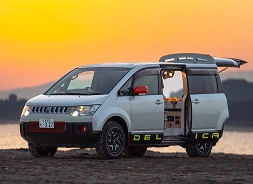
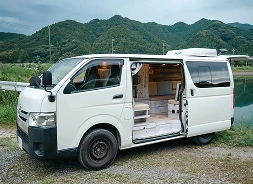
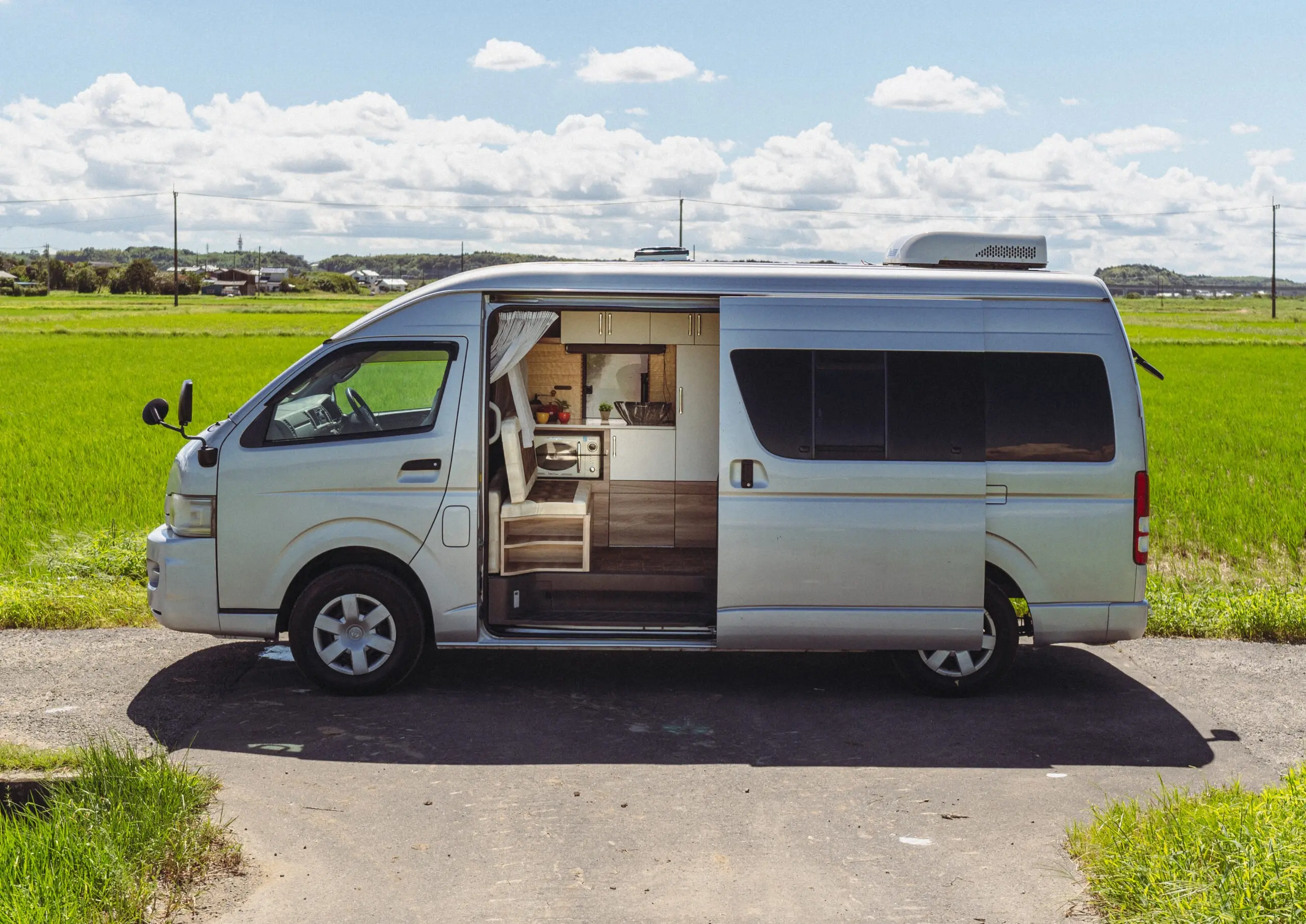
- Recommended vehicle: Mini and Mid-Size campervans. Mini vans are ideal for city edges and coastal towns. Mid-size vans handle the mountain passes and narrow Kii Peninsula roads comfortably. [Fleet info: Mini Campervans, Mid-Size Campervans]
- Hardest section: Koyasan to Kumano Hongu (Day 12). Slower than it looks on a map.
 Road trip map
Tokyo pickup, Tokyo Bay overnight
Collect the campervan from the Tokyo branch. Allow about an hour from arrival to actually being on the road. The Tokyo campervan first-timer’s guide covers the pickup process if you haven’t rented from us before.
Don’t try to do Tokyo sightseeing on day one. Park near the bay, stock groceries, sort your luggage, and rest. A bad start ruins more campervan trips than bad weather.
Day 1 overnight: Odaiba Seaside Park Campground ¥3,000 per night
Drive southwest from Tokyo. Kamakura was Japan’s de facto capital from 1185 to 1333 the period when samurai government replaced imperial rule and the Great Buddha at Kotoku-in dates from 1252. The bronze statue has sat in the open air since the wooden temple housing it was destroyed by a tsunami in 1498. Worth the half-day.
Park outside Kamakura proper and walk. The streets around the major temples were never designed for vehicles larger than rickshaws. Continue west to Enoshima for the coastal stretch and the evening.
Where to eat: Shirasu-don at Hase Shirasu Cafe, Kamakura
Day 2 overnight: Shonan Beachside RV Park ¥4,200 per night
Kamakura and the Shonan coast
Hakone: the gateway day
Hakone is volcanic geography a caldera with hot springs, a lake, and roads that wind. The point isn’t to do everything. Pick two things: a soak at an onsen, and one viewpoint over Lake Ashi. The pirate ship cruise and the Open-Air Museum are fine attractions but they’re not why you’re here on day three of a 16-day trip.
Onsen recommendation: Tenzan Onsen, Hakone (tattoo-friendly policy)
Day 3 overnight: Hakone Lake Ashi Campground reserve 6–8 weeks in advance, ¥4,500 per night
- Hakone book-ahead warning
Spend the day around the Five Lakes. Kawaguchiko is the most accessible. Yamanakako is quieter. Saiko and Shojiko have the famous photographic compositions but smaller infrastructure. Motosuko, the most western lake, is on the 1,000-yen note.
The mountain isn’t always visible. On about a third of days, especially in summer, cloud cover wins and you see nothing of Fuji-san at all. Plan the day so it works regardless lakeside walks, a hot spring, lunch at a hoto noodle restaurant. Fuji is the bonus, not the schedule.
The Mount Fuji campervan tour guide has specific viewpoint coordinates and parking options that took us several seasons to refine.
Day 4 overnight: Kawaguchiko Lakeside Campground ¥3,800 per night
Mount Fuji, slowly
- Hakone book-ahead warning
Matsumoto and Kamikochi
The Japan Alps section starts here. Matsumoto Castle (Matsumoto-jo) is one of five original castles in Japan that have never been destroyed and rebuilt most others, including the famous ones, are reconstructions. The black-painted exterior gives it the local name ‘Crow Castle.’
Kamikochi itself can’t be entered by private vehicle, ever. Park at Sawando (¥600 per day, last I checked verify before you book) or Hirayu and take the shuttle bus. The 30-minute bus ride is part of the experience. The valley is closed to vehicles year-round to protect the alpine environment.
Day 5 overnight: Hirayu Onsen RV Parking ¥4,200 per night
Takayama is one of the best old-town stops in Japan the Sanmachi Suji preservation district is genuinely intact merchant streets, not a reconstruction. The morning markets (Miyagawa Asaichi and Jinya-mae) run from around 7am. Go before tour buses arrive.
Hida beef is what to eat here. It’s the regional wagyu Hida Prefecture beef has been raised for centuries on mountain pasture, and the grade-rating system is roughly comparable to Kobe beef but at maybe two-thirds the price. Hida beef nigiri served on a rice cracker is the casual street version.
Day 6 overnight: Takayama Hida RV Park ¥4,500 per night
Takayama Old Town: Hida Food Region
Shirakawa-go and on to Kanazawa
Shirakawa-go is a UNESCO World Heritage village famous for gassho-zukuri (“praying hands”) farmhouses the steep thatched roofs are pitched at roughly 60 degrees to shed heavy mountain snow. The village is still inhabited. People live and farm here. The tour-bus crowds are real and unavoidable in season go either very early or very late in the day.
Then drive to Kanazawa for the night. The city deserves more time than this itinerary gives it, but a half-day on the morning of Day 8 is workable.
Day 7 overnight: Kanazawa Castle RV Park book early, ¥4,800 per night
Kenroku-en is one of the three great gardens of Japan (the other two are Korakuen in Okayama and Kairakuen in Mito). The ‘six attributes’ the name refers to are spaciousness, seclusion, artifice, antiquity, water, and broad views a Sung Dynasty Chinese landscape principle. Two hours is enough to walk through it properly.
Omicho Market is the morning’s other anchor Kanazawa’s fish market, in continuous operation since 1721. The seafood bowls (kaisendon) are the simple version; if you want to go deeper, find a stall doing nodoguro (blackthroat seaperch), which is Kanazawa’s signature fish.
Then drive to Lake Biwa for the night. Long driving day. Don’t try to add other stops.
Day 8 overnight: Lake Biwa Riverside Campground ¥3,900 per night
Kanazawa morning, drive to Lake Biwa
Lake Biwa and the edge of Kyoto
Don’t drive into central Kyoto with a campervan. The city is genuinely difficult narrow streets, limited large-vehicle parking, tourist congestion. Stay on the eastern edge or at Lake Biwa, then use the JR Biwako Line or buses to reach specific Kyoto districts.
Arashiyama is the most campervan-friendly Kyoto district peripheral parking is available, and the bamboo grove, Tenryuji temple, and Togetsukyo bridge are walkable from each other. Treat Kyoto today as a sampling, not a tour. You’ll be back another trip.
For a Kyoto-focused route, see the dedicated Tokyo to Kyoto campervan road trip guide.
Day 9 overnight: Lake Biwa / Kyoto East Campground ¥4,200 per night
Nara was Japan’s capital from 710 to 784 before Kyoto. Todaiji, the Great Buddha Hall, contains a 15-metre bronze Buddha cast in 752. The hall itself, rebuilt in 1709 after fires, is one of the largest wooden buildings in the world even at two-thirds its original size.
Half a day in Nara is enough for this itinerary. Then drive south toward Koyasan. The mountain road climbs from sea level to roughly 800 metres over winding passes. Slower than the map suggests. Arrive before dark Koyasan after sunset feels different, and parking is harder to figure out when you can’t see.
Day 10 overnight: Ekoin Temple Shukubo accepts campervans, ¥6,500 per night
Nara and onward to Koyasan
A full day on Koyasan
This day matters. Koyasan was founded in 816 CE by Kūkai, the Buddhist monk known posthumously as Kobo Daishi, as the headquarters of Shingon Buddhism. The mountain town contains 117 active temples on a single ridge at 800 metres elevation. It is, by some distance, the most coherent Buddhist sacred site in Japan.
Okunoin is the centrepiece Kūkai’s mausoleum, reached by a 2 km cedar-lined path through Japan’s largest cemetery. Over 200,000 graves line the approach. Some are from the 9th century. The cedars are older than most of the buildings in Kyoto. Walk it once in daylight and, if you can, once at dusk when the lanterns come on.
Other essential stops: Kongobuji (the main monastic complex), the Garan (the temple precinct Kūkai laid out himself), and a meal of shojin ryori temple vegetarian cuisine at one of the temple-restaurants. The cuisine is essentially unchanged for centuries: no meat, no fish, no garlic or onion, focused on tofu, mountain vegetables, sesame, and seasonal fruit.
Walking Okunoin at dusk, when the lanterns come on between the cedars and the moss-covered graves, is one of the few experiences in Japan that genuinely doesn’t have an equivalent anywhere else.
- Quick fact Koyasan
This is the day to take seriously. The road south from Koyasan to Kumano Hongu is narrow, forested, and slower than expected. Budget extra time. Refuel before you leave Koyasan fuel stations on this route are spread out.
Kumano Hongu Taisha is one of three Kumano Grand Shrines, and the centre of the Kumano Kodo pilgrimage system. The current shrine sits on raised ground; the original site, marked by a giant torii gate (the largest in Japan at 33 metres) in the floodplain below, was destroyed by a flood in 1889 and the shrine was moved. The torii gate marks the original location.
Day 12 overnight: Koyasan Ekoin Shukubo ¥6,500 per night
Koyasan to Kumano Hongu: the hardest driving day
Nachi Falls and the Kii coast
Drive east from Kumano Hongu toward Nachi-Katsuura and Kumano Nachi Taisha. Nachi-no-Otaki is Japan’s tallest single-drop waterfall at 133 metres, and the combination of the falls, the three-storied pagoda, and the forested shrine produces the most photographed view in Wakayama Prefecture. The view from Daimonzaka the cedar-lined stone steps approaching the shrine is the version everyone has seen on tourism posters.
Then continue to the coast for seafood. Katsuura has a tuna market that’s one of Japan’s largest by volume.
Day 13 overnight:Yunomine Onsen RV Park book ahead, ¥5,800 per night
Ise Jingu is the most sacred Shinto shrine in Japan. Naiku, the Inner Shrine, is dedicated to Amaterasu the sun goddess, and according to imperial tradition the ancestor of the Japanese imperial line. The shrine is ritually rebuilt every 20 years on an adjacent site, in a ceremony called shikinen sengu, which has happened (with some interruptions) for roughly 1,300 years. The most recent rebuild was in 2013. The next is 2033.
Approach through Oharaimachi, the old shrine-town street. The architecture is wooden Edo-period style, restored to a consistent visual standard. Akafuku mochi, the soft rice cake with sweet bean paste, has been sold on this street since 1707 and is, like Mariko’s tororo-jiru, a documented continuous operation. Try them fresh; they’re significantly better than the boxed version.
Day 14 overnight: Ise Riverside Campground ¥4,500 per night
Ise Jingu
Atsuta Jingu and the Kiso Valley
Drive north through Nagoya. Atsuta Jingu is the second-most-sacred Shinto shrine after Ise it houses (by tradition) Kusanagi-no-Tsurugi, the legendary sword that is one of the three imperial regalia. The shrine is in central Nagoya but its grounds are a forest pocket; the contrast is the point.
Then continue into the Kiso Valley. Tsumago and Magome are the two best-preserved post towns on the historic Nakasendo highway (not the Tokaido the Nakasendo was the inland alternative). Tsumago does not allow cars on its main street during daytime park at the designated lots and walk.
Day 15 overnight: Kiso Valley RV Park ¥4,500 per night
The final day. Don’t overpack it. The Tomei expressway from Shizuoka back to Tokyo is straightforward but long. Refuel early, clean the vehicle, organise your luggage, and leave at least 90 minutes of buffer for the return check-in.
On a clear day, you’ll see Mount Fuji from the Shizuoka-side roads one last time. Treat that as the route’s bookend, not its main event.
Return the vehicle to our Tokyo branch. Allow plenty of time for inspection.
Shizuoka return to Tokyo
- Tokyo Bay
- Kamakura
- Hakone
- Mount Fuji
- Fuji Five Lakes
- Matsumoto
- Kamikochi access area
- Takayama
- Shirakawa-go
- Kanazawa
- Lake Biwa
- Kyoto edge
- Nara
- Koyasan
- Kumano Kodo
- Nachi-Katsuura
- Ise Jingu
- Oharaimachi
- Atsuta Jingu
- Kiso Valley (Tsumago)
- Shizuoka
Best Stops on This Honshu Campervan Circuit
What to skip if pressed for time
If you must compress to 12–14 days, these are the cuts I’d make in order:
- First cut (Day 9): the Kyoto edge day. Substitute a longer Lake Biwa stay or a second night in Nara.
- Second cut (Day 15): the Kiso Valley diversion. Drive straight back through Nagoya and Shizuoka.
- Third cut: compress Hakone and Mount Fuji into a single day. You lose the Five Lakes; you keep the volcanic landscape and the onsen.
What I would never cut: Koyasan (Days 10–11), Kumano (Days 12–13), Ise (Day 14). The Kii Peninsula is the route’s reason for existing.
Drive, Stop, Explore — Your Japan Itinerary
This 16-day route starts and ends at our Tokyo branch. Compare vehicle sizes on our fleet page. Popular models for this route include The Snow Monster, The River Side, and The Lounge narrow-high campervan. Contact our team for route advice or book directly online.
Have Questions?
What Travelers Ask Before Driving Across Honshu
Can I complete this Honshu campervan circuit in 16 days?
Yes. 16 days is enough if you keep daily drives realistic and avoid overloading each stop. Some mountain and city sections require slower travel, so plan parking, rest stops, and overnight stays in advance.
Is this route suitable for first-time campervan travellers in Japan?
Only for confident drivers comfortable with longer drives, mountain roads, paid parking, and advance campground planning. First-time visitors who want a simpler trip should consider our Tokyo to Kyoto campervan road trip or the beginner’s guide to campervans first.
Can I drive a campervan into Kamikochi?
No. Private cars are restricted from entering Kamikochi year-round. Park at Sawando or Hirayu and continue by shuttle bus or taxi.
What are the sacred mountain highlights on this route?
The strongest spiritual highlights are Mount Fuji, Koyasan, Kumano Kodo, and Ise Jingu. Mount Fuji has pilgrimage significance, Koyasan is a major Buddhist mountain area, Kumano Kodo is an ancient pilgrimage route, and Ise Jingu is Japan’s most sacred Shinto shrine.
Can a campervan reach Koyasan?
Yes. The Koya Ryujin Skyline and the main road via Kudoyama both reach the mountain town. Mini and mid-size campervans handle the mountain roads comfortably. Larger vehicles should plan carefully some side streets and temple approaches have width restrictions.
Should I drive inside Kyoto and Nara with a campervan?
It’s better to avoid unnecessary inner-city driving in Kyoto and Nara. Park at a paid lot outside the busiest districts and use public transport or walk. This saves time, lowers stress, and avoids struggling with narrow streets.
Is the Kumano Kodo walkable in a few hours?
Yes you don’t need to walk the whole route. Several short sections (1–3 hours) connect to roadside access points. The Daimonzaka approach to Kumano Nachi Taisha is a famous short walk. Longer day-walks are possible from Kumano Hongu.
How much does renting a campervan for this trip cost?
Costs vary by season, vehicle size, and rental length. See our campervan rental cost in Japan guide for current pricing breakdowns and the 2026 rental guide for seasonal updates.
Is this route better than a Tokyo to Kyoto road trip?
It depends on the traveller. A Tokyo to Kyoto route is easier and more direct. This 16-day circuit is better for travellers who want a fuller experience with sacred mountains, coastal roads, historic villages, pilgrimage sites, and a complete return loop. For the simpler option, see our Tokyo to Kyoto campervan road trip.
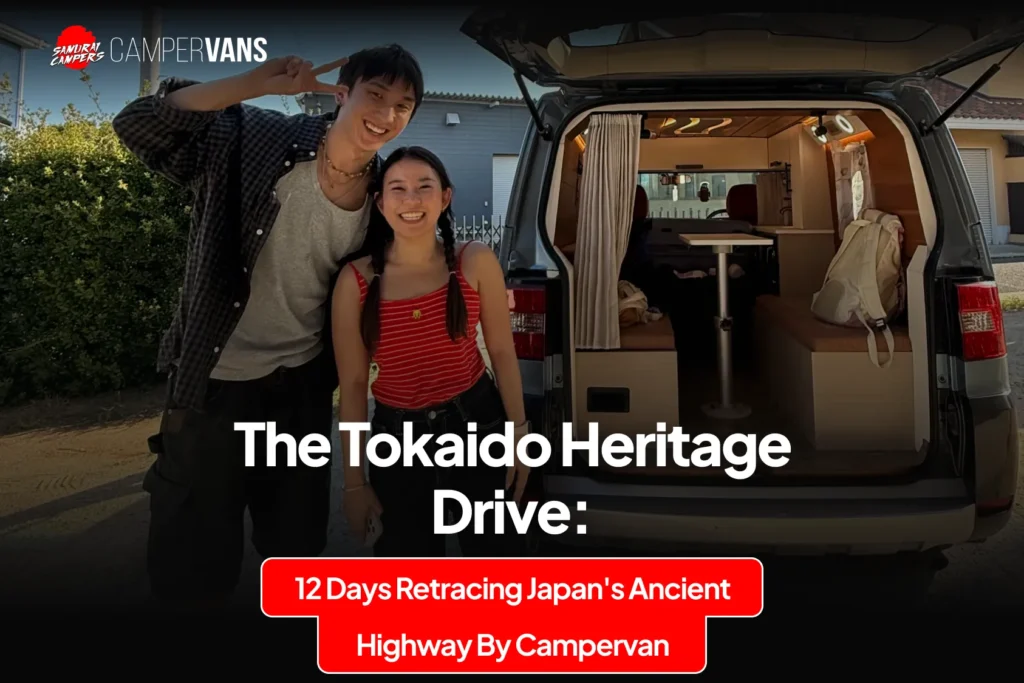
Tokyo to Osaka in 12 days on the historic Tokaido. Three intact sections, one real road trip.
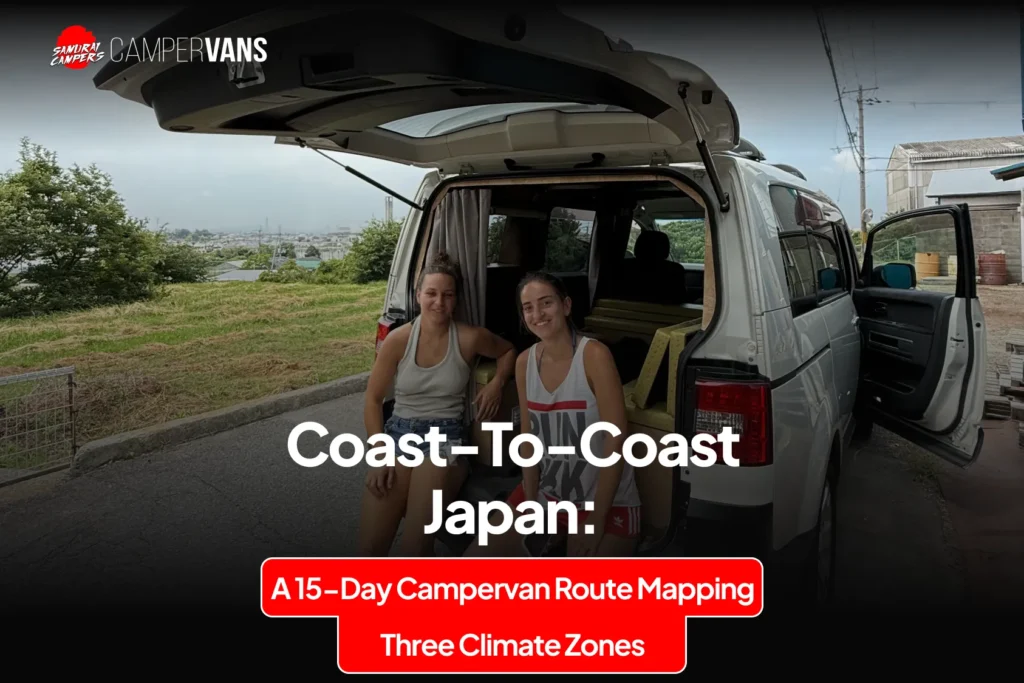
Cross Honshu from coast to coast in 15 days. Three climate zones, one campervan, no repetition.
8 days, one-way Tokyo to Aomori through five volcanic national parks. Best May–October only.