Why the Old Tokaido Is the Only Tokyo-to-Osaka Drive That’s Actually Worth 12 Days
By Samurai Campers · Pickup: Tokyo · Return: Osaka · Last driven: June 2025 · Reviewed: April 2026
The Tokaido is not a museum route. It’s a road that’s been continuously used for 400 years bits of it are highway, bits of it are walking street, bits of it are gone. The skill is knowing the difference.Pickup at our Tokyo branch. Return at our Osaka branch this is a one-way route. Confirm one-way drop-off and any surcharge with our team before booking. See our Tokyo to Osaka campervan itinerary guide for an overview of the full corridor.
- Answer box Tokaido by campervan:
The historic Tokaido is best driven over 10–14 days as a one-way Tokyo-to-Osaka route. Twelve days is the sweet spot: enough for Hakone, Yui, Arai, Seki-juku, and Kusatsu without rushing.
Route summary
Tokyo (Nihonbashi) → Yokohama → Odawara → Hakone → Mishima → Yui → Shizuoka → Hamamatsu → Arai → Nagoya/Atsuta → Kuwana → Seki-juku → Kusatsu → Otsu → Kyoto (Sanjo Ohashi) → Osaka
Duration: 12 days, one-way Tokyo to Osaka
Best season: Mid-October to late November for autumn colours. Cherry blossom season also works but Hakone gets crowded.
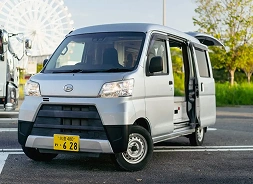
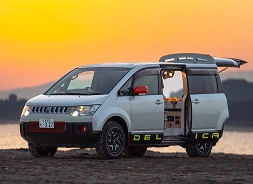
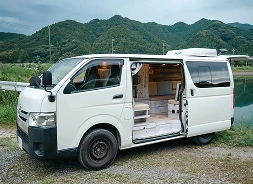
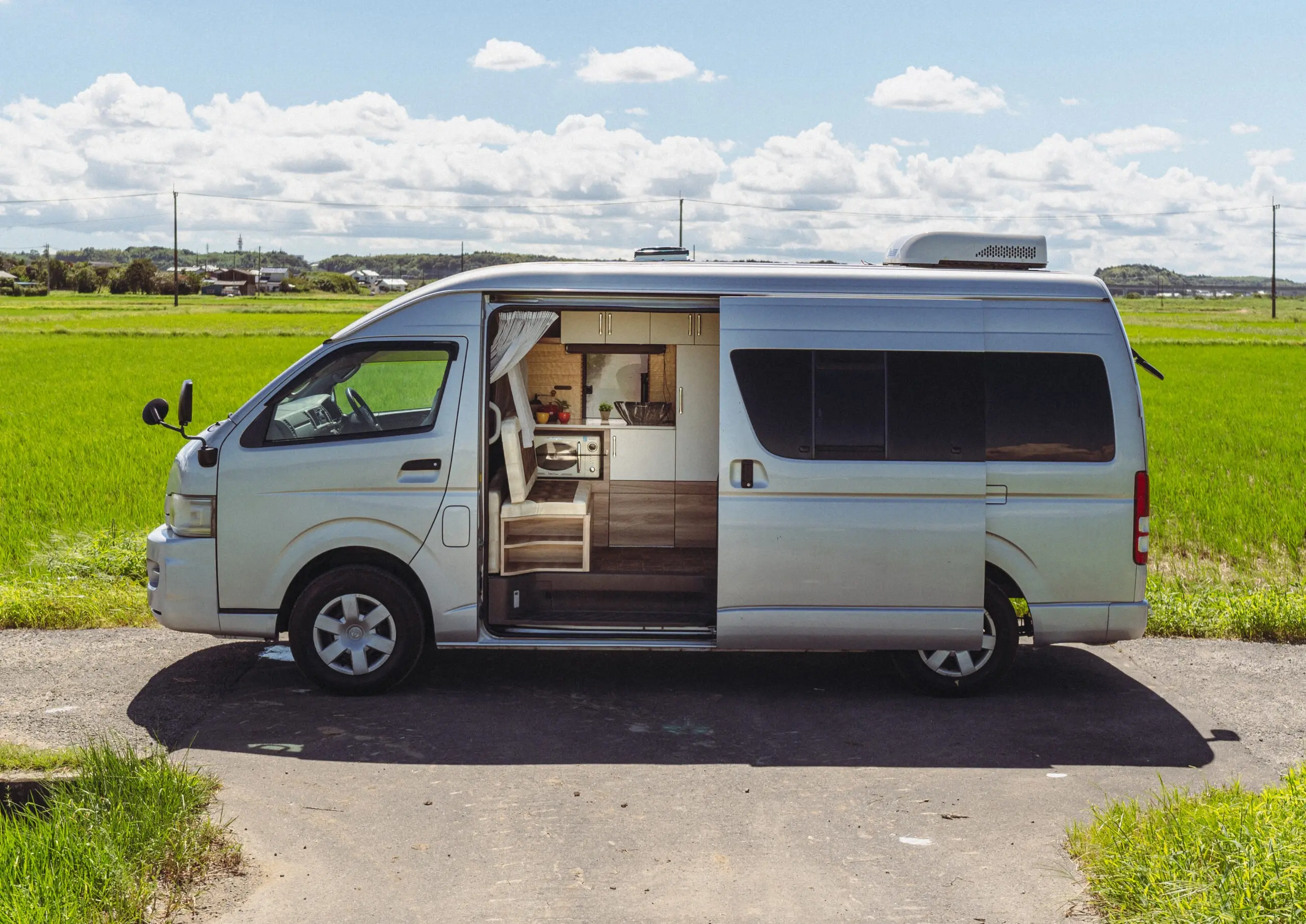
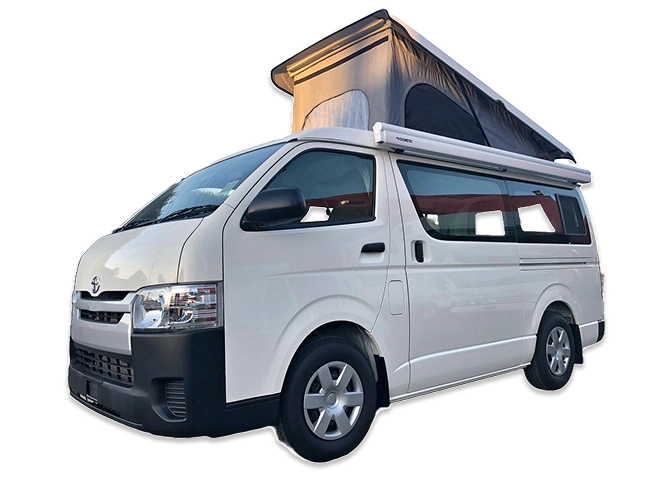
Recommended vehicle: Mid-Size Campervan handles the heritage post-town streets better than larger rigs. Available from our Tokyo branch.
 Road trip map
Tokyo pickup and Nihonbashi
Tokyo pickup and Nihonbashi
Collect from our Tokyo branch. The complete first-timer’s guide to campervan rental in Tokyo walks through the inspection and document process. The Tokaido officially starts at Nihonbashi the bridge where Japan’s road-distance zero point is set into the stone. Walk to the bridge, take the photo, and leave central Tokyo.
Day 1 overnight: Odaiba Seaside Park Campground ¥3,000/night
- Quick fact Nihonbashi:
Designated the starting point of all five Edo-period highways in 1604. The kilometre-zero marker for all Japanese national highways is still embedded in the bridge surface.
The first stretch of the Tokaido was once a string of major post towns. Today it’s an unbroken urban corridor. Skip Shinagawa-juku and Kawasaki-juku the signs are there but the context is gone. Use Yokohama itself as the day’s stop.
Day 2 overnight: Yokohama Bay RV Park ¥4,200/night
Tokyo to Yokohama
Tokyo to Yokohama
Fujisawa, Oiso, Odawara
Fujisawa, Oiso, Odawara
By Fujisawa the urban density loosens. Odawara has a castle and a working old-town feel this is the practical staging point before Hakone. Don’t skip Odawara’s kamaboko (steamed fish cake) shops; Odawara has been producing kamaboko for Tokaido travellers for several centuries.
Day 3 overnight: Odawara Coastal Campground ¥4,000/night
The cedar avenue runs about 580 metres between Hakone-machi and Moto-Hakone the most intact original stretch of the Tokaido you can reach without serious hiking. The trees were planted in 1618. Some are still alive you’re walking under cedars that stood here before the Mayflower.
You can drive past this section in ten minutes. You should walk it in forty.
After the cedar walk, the reconstructed Hakone Checkpoint (Hakone Sekisho) is worth the admission. The Tokugawa government used Hakone as the primary inspection point on the Tokaido searching for weapons going east and women leaving Edo.
Day 4 overnight: Hakone Lake Ashi Camper Park ¥4,500/night
Hakone: the day this route earns itself
Hakone: the day this route earns itself
- Quick fact Hakone Checkpoint:
Operated 1619–1869. The current 2007 reconstruction is based on Edo-period administrative records. Open 9am–5pm.
Mishima to Yui, and a lesson in Hiroshige
Mishima to Yui, and a lesson in Hiroshige
Yui is the day’s real stop. The Shizuoka City Tokaido Hiroshige Museum of Art sits on the exact site of the old Yui honjin. Hiroshige travelled the entire Tokaido in 1833–34 and produced a print for each station. The Yui print shows travellers on a precarious cliff path overlooking Suruga Bay you can drive the modern road and see roughly the same view. Yui is also sakura ebi country, season March–June and October–December.
Day 5 overnight: Yui Seaside RV Area ¥4,000/night
Mariko-juku: the 20th station, famous for tororo-jiru. The same restaurant Chojiya has served this dish to Tokaido travellers since 1596. A documented continuous operation. Shimada and Kanaya: the two post towns either side of the Oi River. The Tokugawa government refused to build a bridge here for 250 years travellers were carried across by professional porters.
Day 6 overnight: Shizuoka River Campground ¥4,100/night
Shizuoka and the Oi River
Shizuoka and the Oi River
Kakegawa to Hamamatsu
Kakegawa to Hamamatsu
Kakegawa Castle is a reconstruction but a good one. One hour is enough. Hamamatsu is the day’s destination, and the reason is unagi. The Hamana Lake brackish waters have produced eel for centuries, and Hamamatsu’s grilling tradition is distinct from both Kanto and Kansai styles.
Where to eat: Unagi Hirokawa, Hamamatsu authentic hitsumabushi-style eel
Day 7 overnight: Hamamatsu Lake Hamana RV Park ¥4,200/night
Arai Checkpoint on the western shore of Lake Hamana is the only Edo-period Tokaido checkpoint building that survives in its original form. Not a reconstruction the actual structure used to inspect travellers from the early 1700s until 1869. Hakone is the more famous checkpoint, but Hakone is rebuilt. Arai is real.
Day 8 overnight: Toyohashi / Okazaki Campground ¥4,000/night
Arai Checkpoint
Arai Checkpoint
Atsuta Jingu, Miya-juku
Lake Biwa and the edge of Kyoto
Atsuta Jingu in Nagoya houses (by tradition) Kusanagi-no-Tsurugi one of the three imperial regalia. Adjacent is Miya-juku, the 41st Tokaido station and the start of the route’s only sea crossing (Shichiri no Watashi the seven-ri boat crossing to Kuwana). You cannot drive the original crossing; the modern road goes around the bay.
Day 9 overnight: Kuwana Riverside Camper Park ¥4,200/night
Seki-juku is the best argument I know for doing this route by campervan rather than the Shinkansen. You cannot understand what the Tokaido was from a train window.Day 10 overnight: Seki-juku RV Campground ¥4,300/night
Seki-juku
Seki-juku
Kusatsu
Kusatsu
Kusatsu-juku, on the south shore of Lake Biwa, is where the Tokaido met the Nakasendo. From Kusatsu west, both routes shared a single road into Kyoto. The Kusatsu Honjin is one of the largest surviving honjin buildings in Japan and is open to visitors.
Day 11 overnight: Lake Biwa Riverside Camper Park ¥4,200/night
Otsu is the 53rd and final Tokaido station. Drive into central Kyoto destination: Sanjo Ohashi, the bridge over the Kamogawa that is the symbolic end of the Tokaido. Then complete the drive to our Osaka branch for the vehicle return.
Otsu to Kyoto to Osaka
Otsu to Kyoto to Osaka
Drive Through Japan Your Way
Samurai Campers offers self-drive campervan rentals across Japan no driver provided, full freedom to set your own pace. Pick up in Tokyo, return in Osaka (one-way).
One-way route confirm availability and the applicable surcharge with our team before booking. Pickup at our Tokyo branch, return at our Osaka branch.
Have Questions?
Traveler Questions for the Classic Tokaido Road Trip
Can you literally drive on the old Tokaido?
Partially. Some sections survive as walking paths (the Hakone cedar avenue, parts of Seki-juku) and cannot be driven. The rest is either modern road on the old alignment, or has been replaced entirely.
Is 12 days enough?
Can you drive the original Edo-period road for the entire trip?
No, and you wouldn’t want to try. Parts of the 400-year-old route are now narrow walking paths through cedar forests, while other sections were paved over by the high-speed Route 1 or swallowed by train tracks. You’ll spend about seventy percent of the trip on modern roads that follow the old alignment; the remaining thirty percent requires parking the van to find the preserved post towns and stone-paths on foot.
Is twelve days really necessary for a drive that takes seven hours on the highway?
If you want to see anything other than concrete and green cargo nets, yes. The direct expressway route is designed to bypass every single town and historical site mentioned here. Twelve days gives you enough breathing room to stop for eel in Hamamatsu, walk the Hakone cedar avenue, and actually explore Seki-juku without feeling like you’re on a frantic delivery schedule.
Which campervan is best for the narrow streets of the old post towns?
If you want to see anything other than concrete and green cargo nets, yes. The direct expressway route is designed to bypass every single town and historical site mentioned here. Twelve days gives you enough breathing room to stop for eel in Hamamatsu, walk the Hakone cedar avenue, and actually explore Seki-juku without feeling like you’re on a frantic delivery schedule.
Do I need to book a one-way rental for this route?
This is strictly a one-way trip from Tokyo to Osaka. Trying to drive it as a loop back to Tokyo would require 20 days and a lot of repetitive highway miles. Pick up the van at our Tokyo branch and drop it off in Osaka; just make sure to confirm the one-way surcharge and vehicle availability with our team before you finalize your travel dates.
When is the best time of year to drive the Tokaido?
Late October through November is the undisputed winner. You get the autumn colors in the Hakone mountains and the Shizuoka highlands without the oppressive humidity of summer or the biting winds of February. Spring is beautiful for the cherry blossoms, but the crowds in Hakone and Kyoto during late March can make finding a quiet campsite nearly impossible.
Cross Honshu from coast to coast in 15 days. Three climate zones, one campervan, no repetition.
21 days by campervan through Tohoku and Hokkaido. Honest about the distances. Worth every kilometre.
8 days, one-way Tokyo to Aomori through five volcanic national parks. Best May–October only.